
Spring Jewels of the Reserve
Heckrodt is home to many spring ephemerals, which are wildflowers that bloom before the forest leaf canopy blocks much of the sunlight from reaching the wetland and forest floor.
They are the spring jewels that quicky fade into the green of summer. Let me share some of the common spring ephemerals of Heckrodt.
Marsh Marigold (Caltha palustris) are in the Buttercup family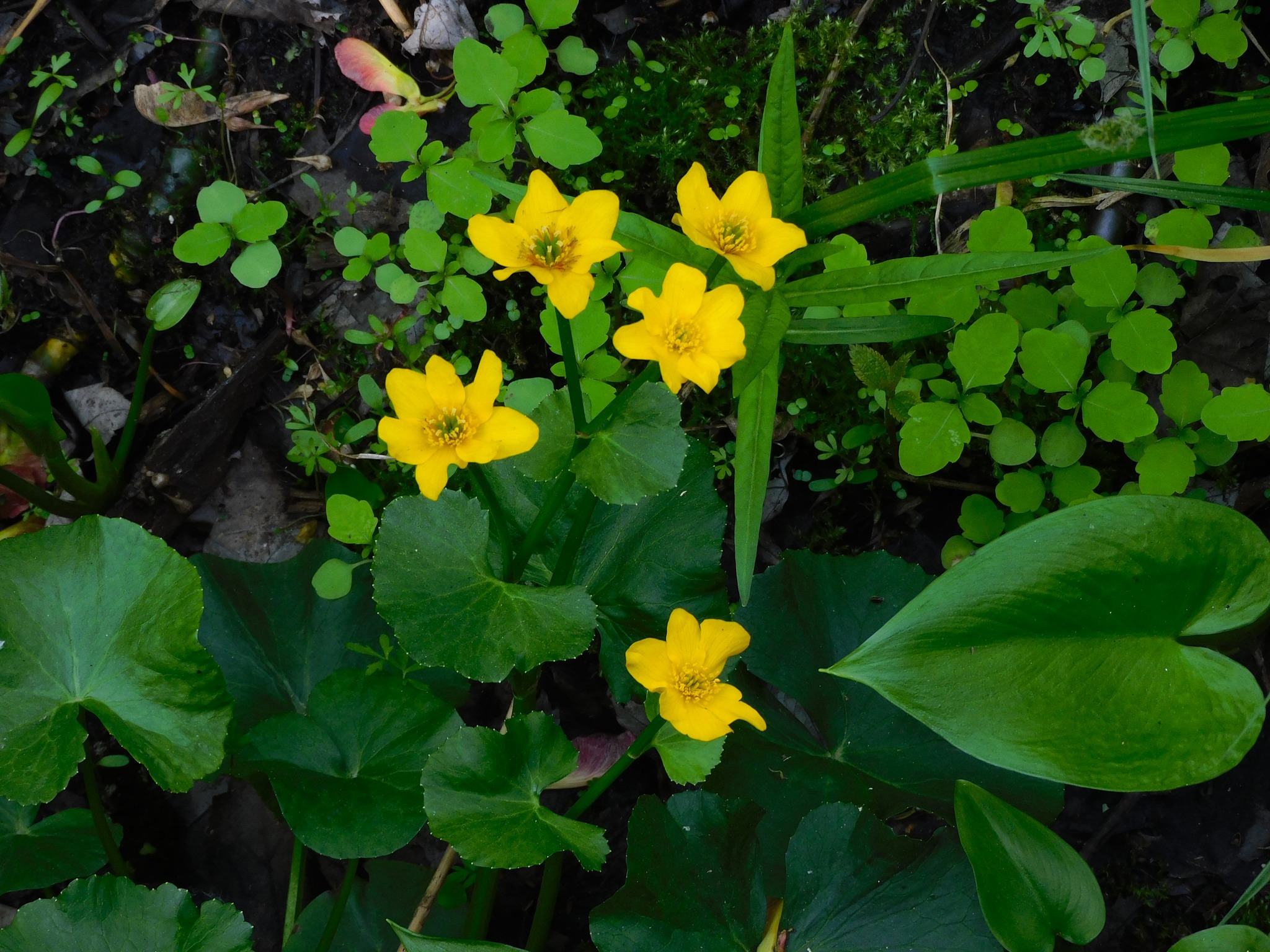 and historically blanketed the wetland in yellow. They can still be seen in smaller numbers throughout the orange and green loops during the months of April & May. They can be identified with their 5-9 petaled, deep yellow flowers. They have green, glossy heart shaped leaves. Marsh Marigold are also called Cowslip, because they cause cattle to become ill if ingested. Marsh Marigold flowers were used as yellow dye for yarn. The leaves were cooked and used to treat anemia, due to their high iron content. The petals and leaves were also used in potions during the English medieval period.
Trout Lily (Erythronium albidum) is a spring wildflower that has a nodding yellow or white flower and two basal leaves that are mottled with 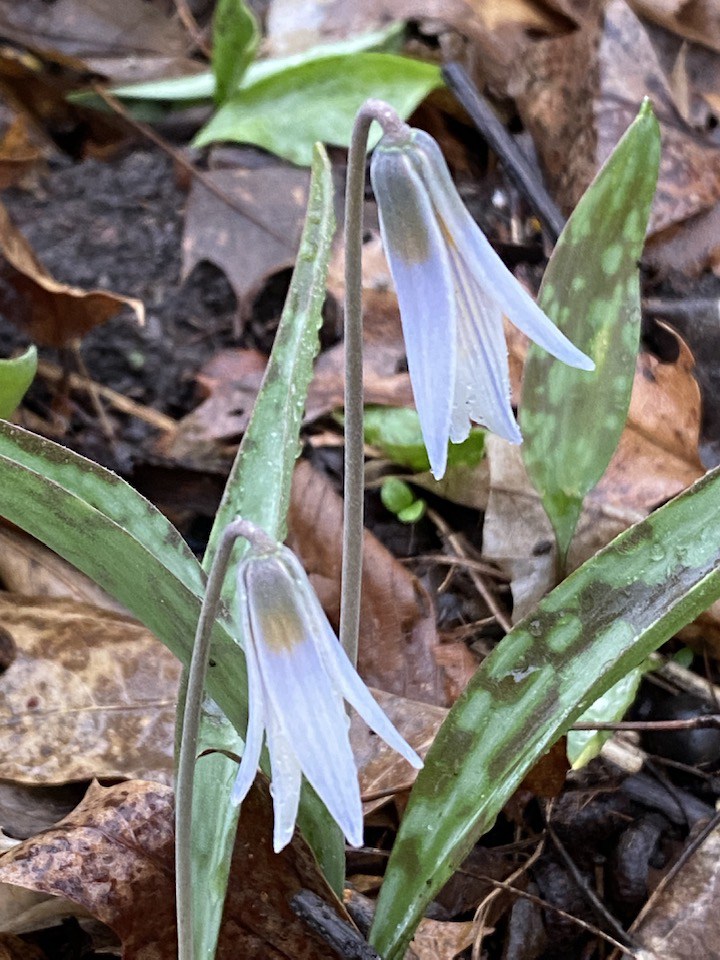 brown spots (looking like a trout.) These flowers can be seen along the blue trail heading to the Wild Space Children’s Nature Playscape. They bloom at the Reserve in April and May. The leaves are edible and can be cooked and eaten like a vegetable. Early settlers collected the bulbs and stored them in root cellars for winter food. Trout lily tea is said to be a cure for hiccups.
Photo by Tim Sweet
Yellow Water Buttercup (Ranunculus flabellaris) can be seen along the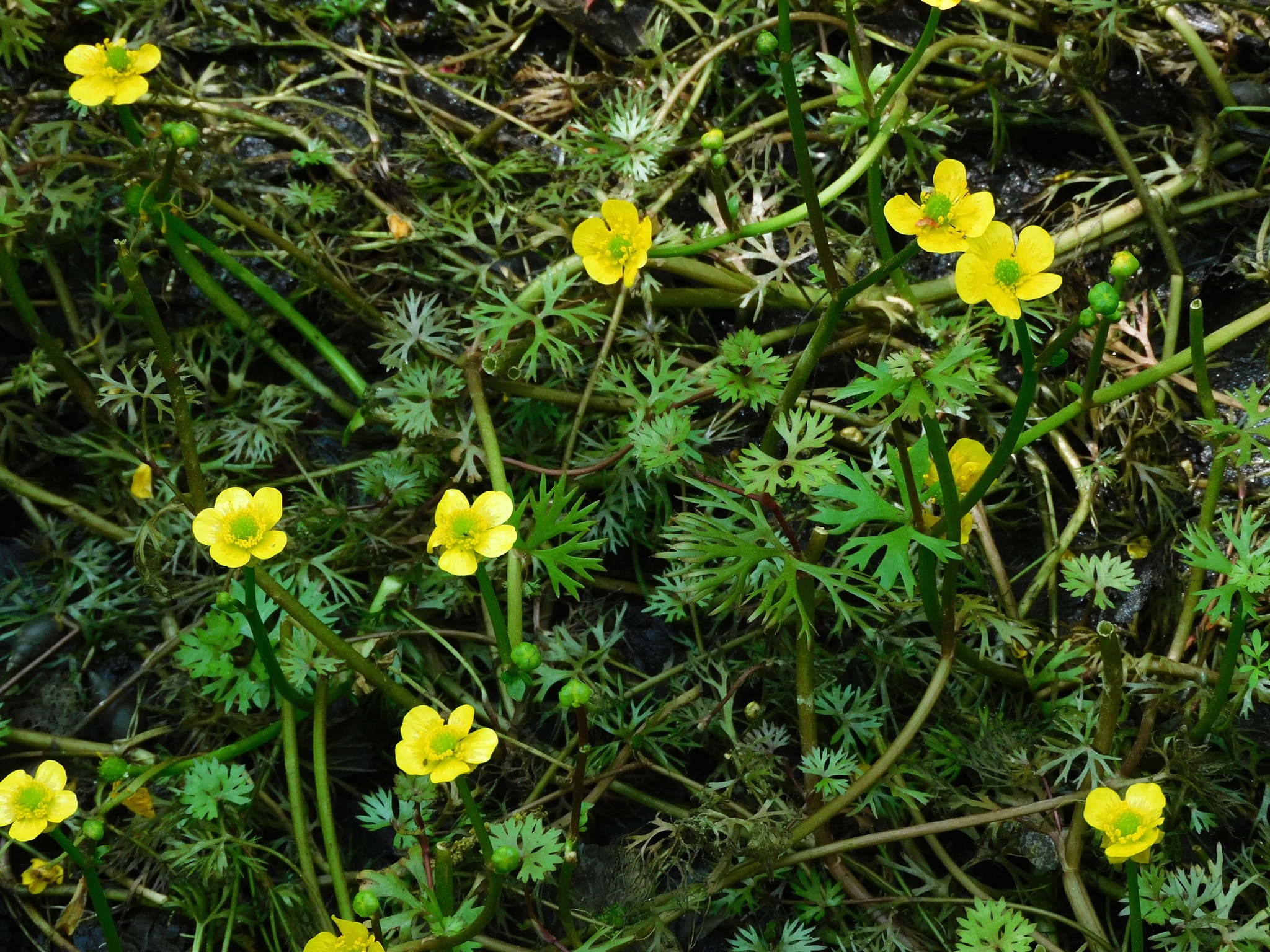 blue loop in the open water areas along the trail. You will notice the lacy, green submerged leaves with small yellow flowers poking up above the water during May and June. A custom emerged that if you touched a buttercup flower on your chin and it turned yellow, you liked butter.
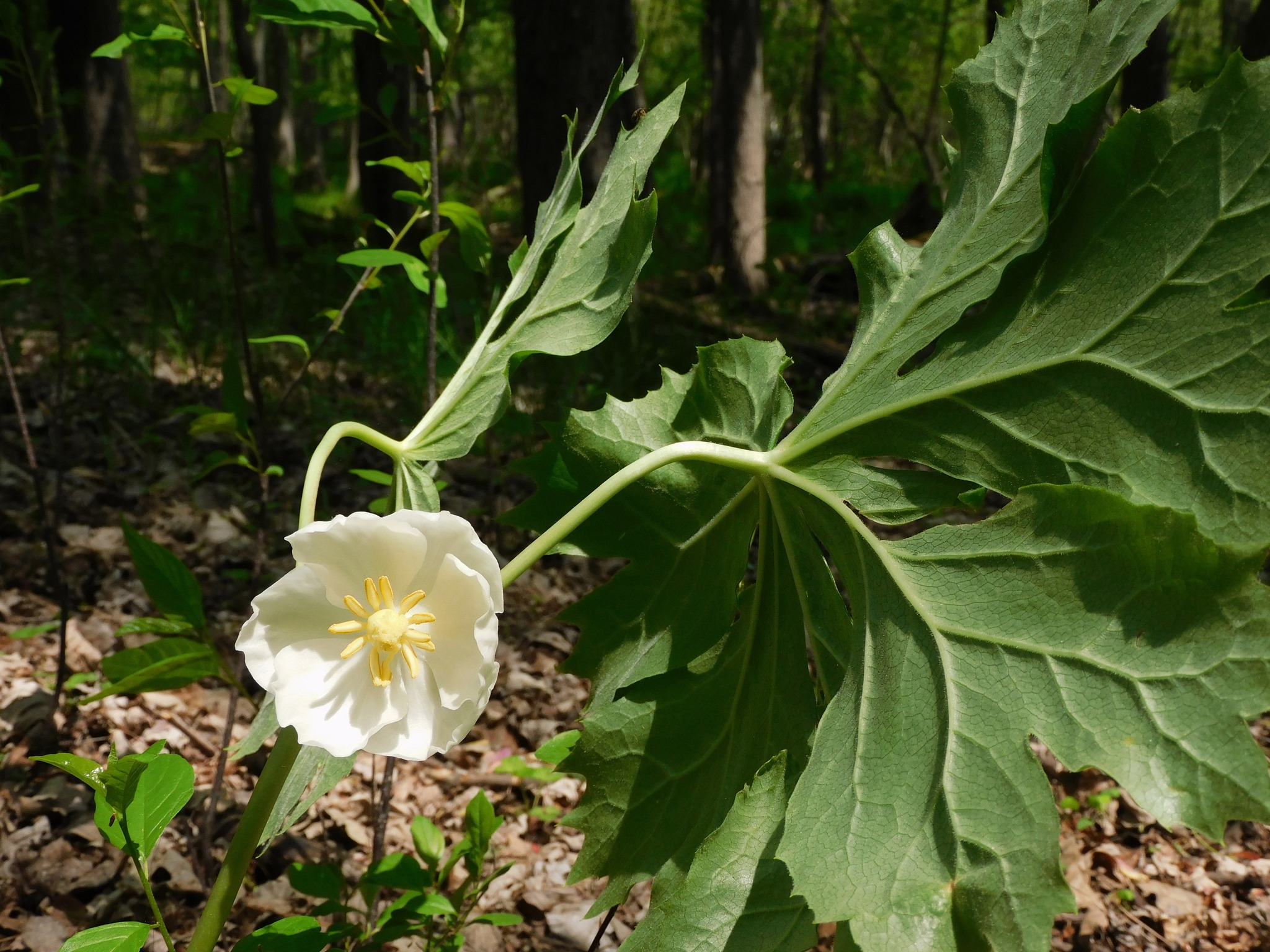
Mayapple (Podophyllum peltatum) bloom along the blue and green trails here at Heckrodt from April through June. You will notice the large umbrella shaped leaves with a solitary white flower growing in the crotch of the stem under the leaves.
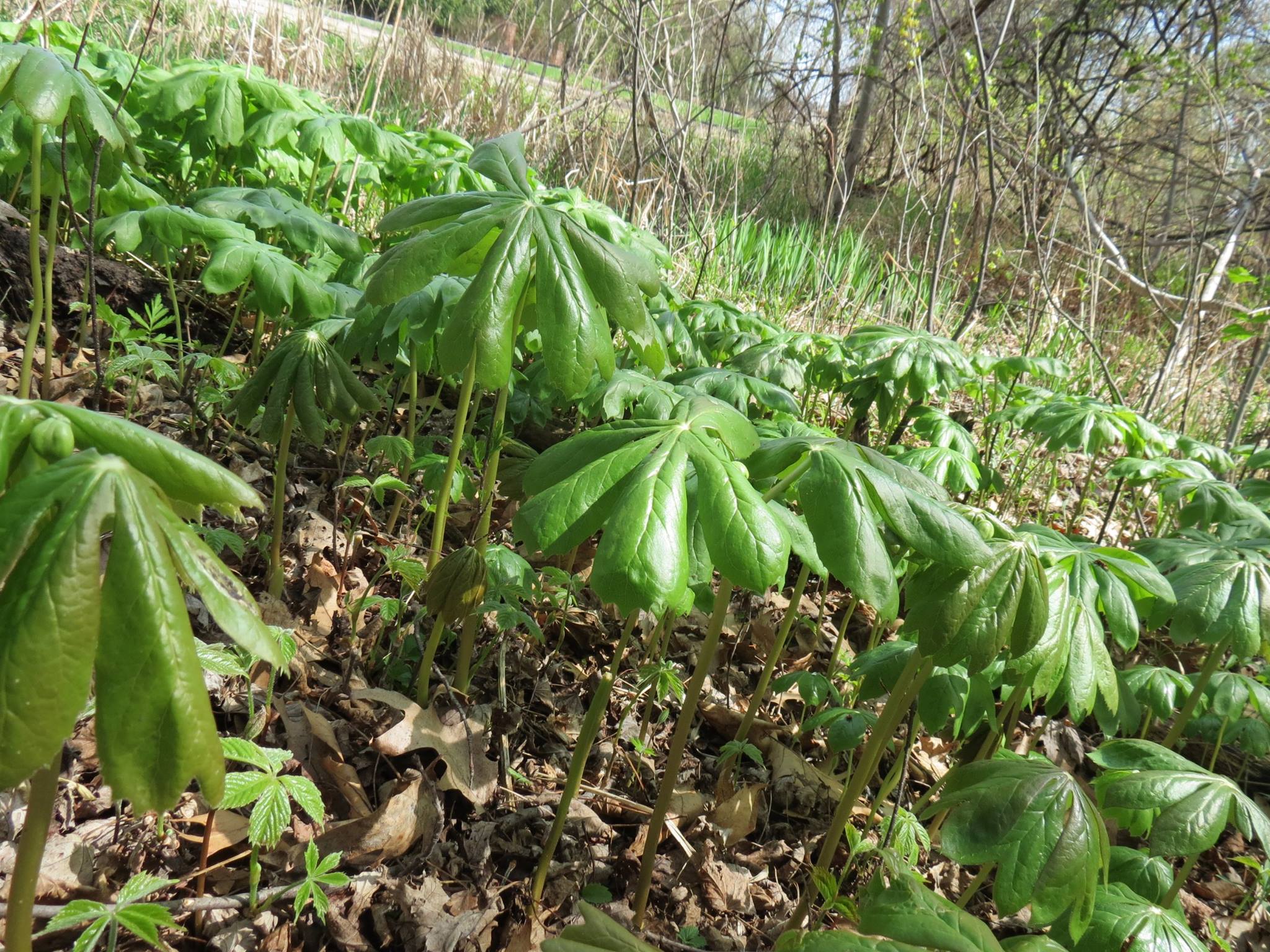
The fruit matures in May, is yellow-green and shaped a bit like an apple. The fruit can be harvested and made into a marmalade. Native Americans used the boiled roots as a strong laxative. Mayapple was once used to treat warts and today is being used in cancer research.
Jack-in-the-Pulpit (Arisaema triphyllum), also known as Indian Turnip,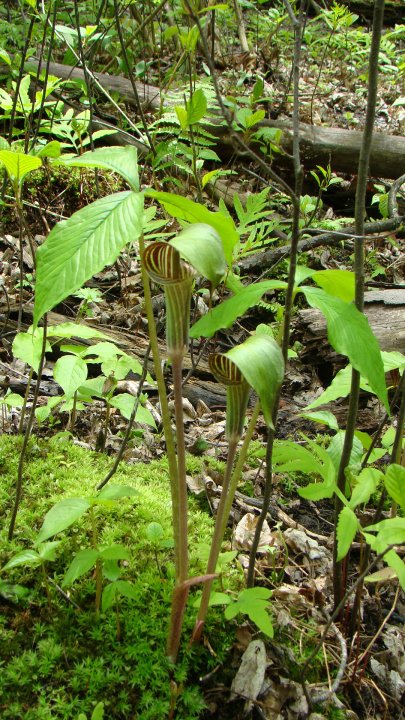 is a unique looking spring ephemeral with a flap like spathe with green and reddish-purple stripes, growing over the clue-shaped spadix (the “Jack” or preacher is in his canopied pulpit), with a three-parted leaf growing from behind. The flower blooms April – June and is pollinated by flies. The fruit is a cluster of scarlet red berries, which are eaten by Wild Turkeys. It can be found along the orange, green and blue trails here at Heckrodt. The root must be dried and boiled before it is eaten, and Native Americans used the powdered root to make flour.
The Common Blue Violet (Viola sororia) is our state flower and can be found blooming along the green loop from April – June. It can be 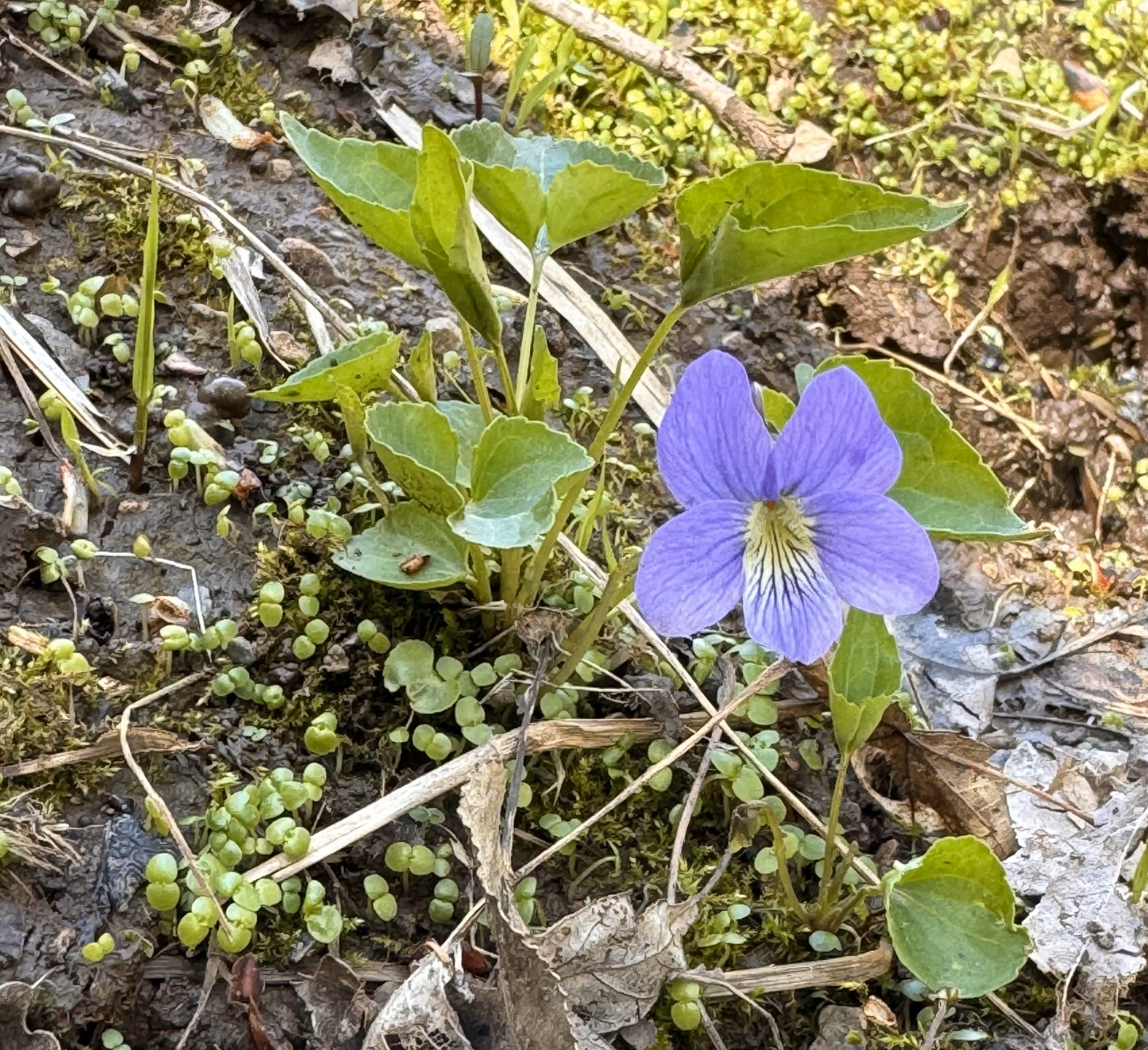 easily identified with its purple petals and heart-shaped leaves. Leaves can be eaten raw in salads or cooked like vegetables, since they are high in Vitamin A & C. Flowers can be made into jelly, jam, candy, or syrup and have also been used to make wine. Violet tea will help get rid of a headache.
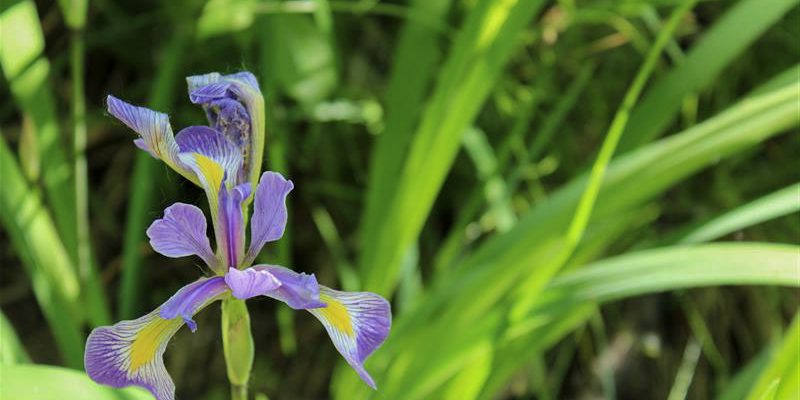
Blue Flag Iris or Swamp Iris (Iris versicolor) has a very showy 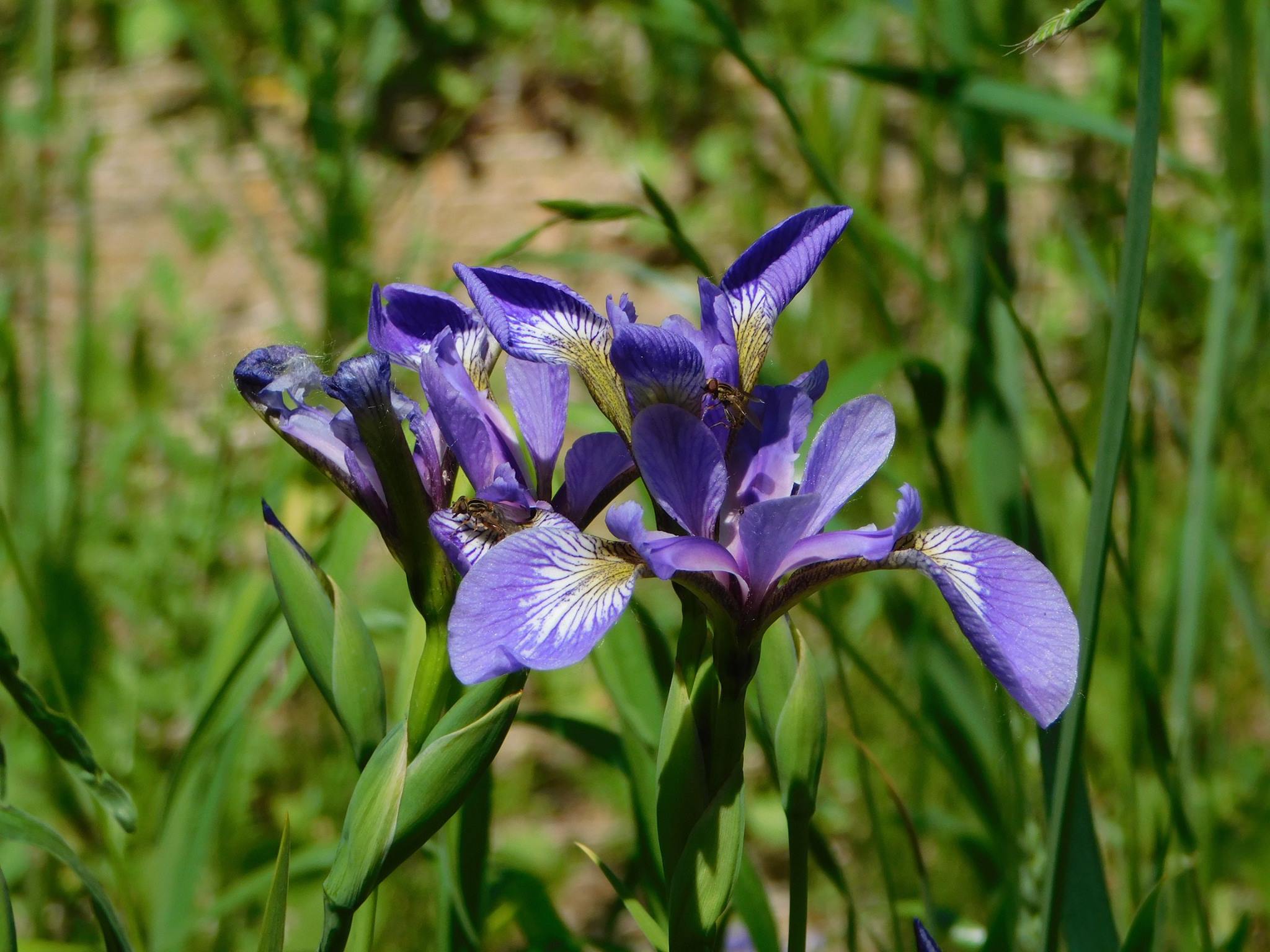 down-curved purple flower with sword-like leaves. It blooms in Heckrodt’s wetland along the orange, blue, and green trails in May-early July. This flower is pollinated by bees and hummingbirds. Muskrats like to eat the newly emerging leaves. Many Native American tribes used the leaves as a green dye and for weaving mats and baskets.
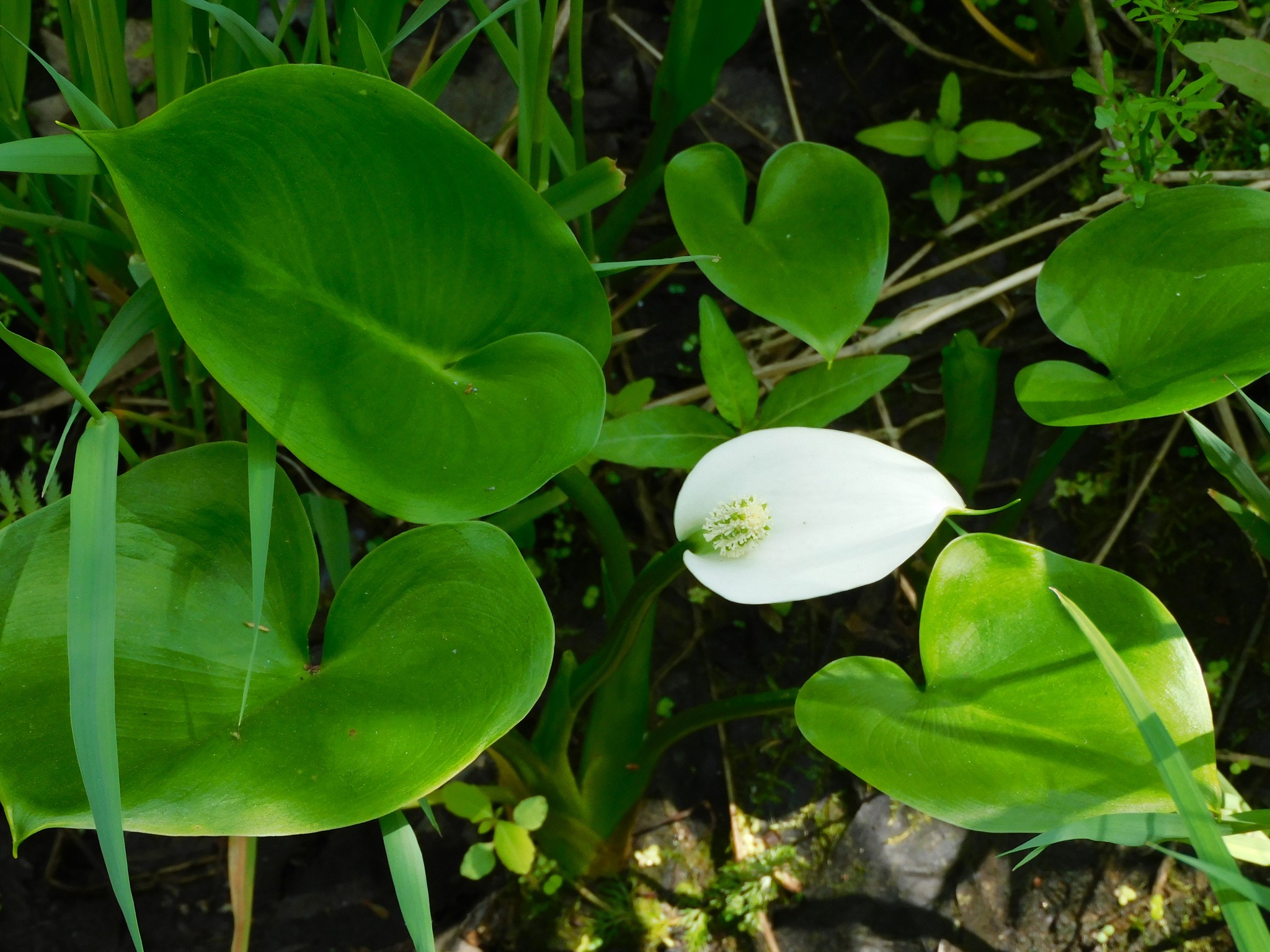 Wild Calla (Calla palustris) is not a member of the Lily family, but it belongs to the Arum family, hence its other name, Water Arum. It is identified by its white spathe or “petal” and large, glossy heart shaped leaves growing out of the water. It blooms in open water areas in the wetland from May through August. Fruit is a cluster of red berries and large rhizomes can be seen emerging from the water’s surface even when the plant is not in bloom. Native Americans used the dried root as a tea to treat the flu.
Now that you know a little about some of the spring ephemerals that grace the wetland with splendor and beauty, I encourage all of you to come out to Heckrodt to search for and explore our spring jewels!
Written by: Heather Weigelt, HWR Naturalist/Administrative Coordinator