
Spring at Heckrodt: A Season of New Life
One of the things I love most about Heckrodt Wetland Reserve is its thriving wildlife—and every spring, I eagerly await what I like to call baby animal season. Each year, the staff works tirelessly to maintain and improve the habitats here, and this spring has been a true celebration of their efforts: the Reserve has become a bustling nursery filled with new life.
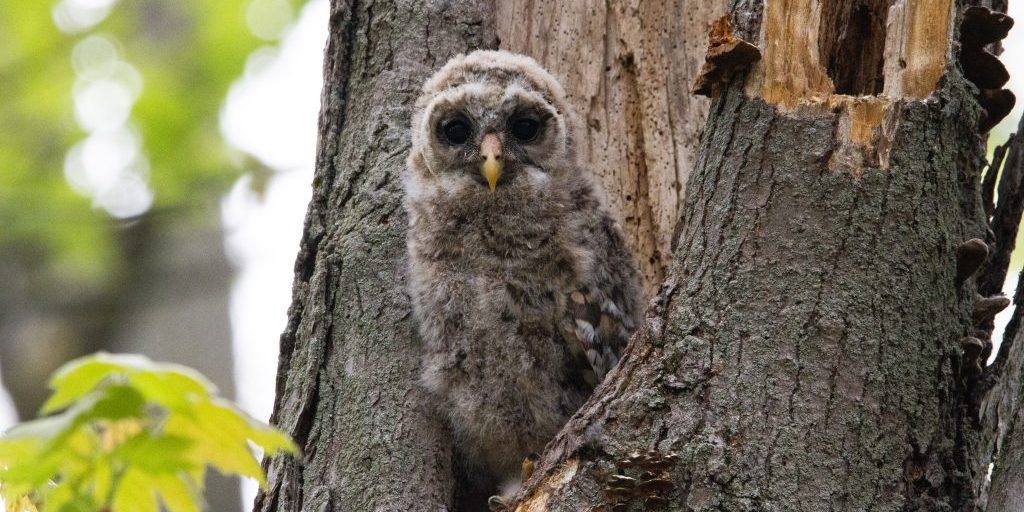
One of the most remarkable sights at Heckrodt is our nesting barred owls. It’s incredible how they return year after year to nest just off the main trail, peacefully coexisting with our many visitors and school groups. This year, we were lucky to welcome three owlets—a first in my time at the Reserve! Barred owls are considered an indicator species, meaning their presence tells us a lot about the health of our ecosystem. These owls need mature forests, dead trees for nesting, and a healthy prey population (sorry, rabbits and squirrels!). We currently have five barred owl mouths to feed in our wetland forest.
We understand that not everyone agrees with the temporary trail closures when the owlets fledge, but with thousands of visitors each spring, our goal is to provide the safest possible environment for these young birds to learn and grow. We’re truly grateful for your understanding and support—protecting wildlife is at the heart of Heckrodt’s mission.
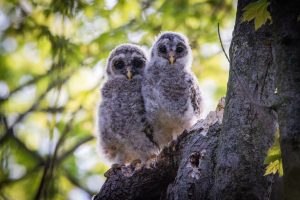
Two Barred Owlets
Newly Fledged Owlet
Adult Barred Owl
In addition to the owls, we’ve had two very visible mallard nests this year—one right in the parking lot and another out in the prairie—and we’ve already welcomed their ducklings. Our wood ducks have been nesting throughout the Reserve, and Canada geese have returned to their favorite spots. My favorite goose always nests on what I affectionately call “Goose Island.” It’s a regular stop on our educational hikes and a great opportunity to teach kids how to respectfully observe wildlife from a distance. The more we nurture this respect in the next generation, the better stewards of the natural world they’ll become.
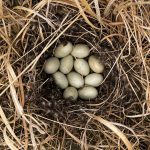
Mallard Duck Nest
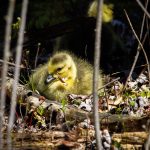
Newly Hatched Gosling
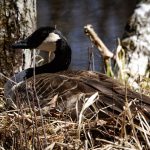
Mother Goose On A Nest
I was especially thrilled to see our sandhill cranes return for their eighth year. When I started at Heckrodt, we didn’t have a nesting pair—then in 2017, we spotted our first crane family with a colt. They’ve come back ever since.
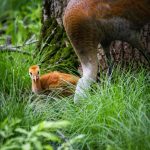
Sandhill Colt With Mother
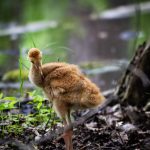
Sandhill Colt Grooming
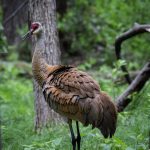
Sandhill Crane
Spring has also brought an explosion of activity from songbirds and woodpeckers. It’s a joy to hear chickadees and woodpeckers excavating nesting cavities and calling throughout the wetland. After the quiet of winter, the growing chorus that starts in late February—barred owls calling, the “cheeseburger” song of chickadees—is pure magic. Each day sounds louder, livelier, and more alive.
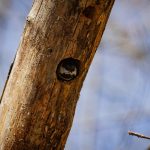
Chickadee Cleaning Out a Nesting Cavity
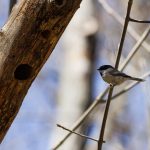
Chickadee Near Nesting Cavity
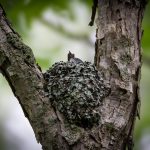
Blue-Grey Gnatcatcher
Fawns are appearing all over the Reserve. This spring, I was lucky enough to witness the birth of a set of triplets.
And just today, I spotted a turkey hen with five tiny poults near the bird feeding station—another wonderful surprise.
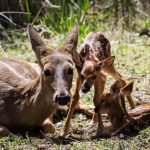
Doe With Her Fawns
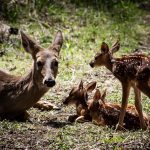
Surprise Triplets
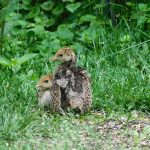
Turkey Poults
I can’t say enough about the amazing work our habitat team, led by Emma and Kelsey, has done. They’ve spent countless hours managing invasive species, planting native trees and wildflowers, and installing deer exclosures to protect the new growth. Thanks to them (and some very helpful volunteers), the Reserve’s ecosystem is in great shape—and we’ll soon be welcoming back our popular invasive-eating goats to lend a hand… or hoof!
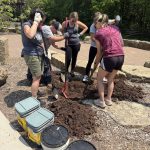
PRN Healthcare Planting a Tree
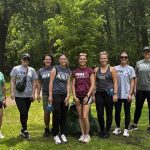
Thanks for Planting Trees PRN Healthcare!
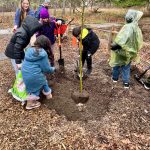
Banta Elementary Students Planting Trees
There’s nothing better than watching a child—or even an adult—experience the wonder of wildlife for the first time. That sense of awe and joy is something truly special, and it’s one of the many reasons I love working here. Heckrodt may no longer be the “hidden gem” of the Fox Valley, but it’s still very much a gem—a place that connects people to nature and to each other.
Blog Written and Wildlife Photography by
Andrea Bierbrauer
HWR Naturalist