Working Together To Help Local Wildlife
May 10, 2024
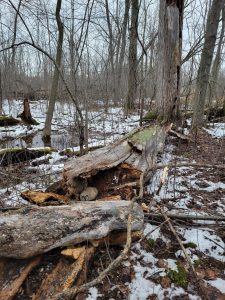
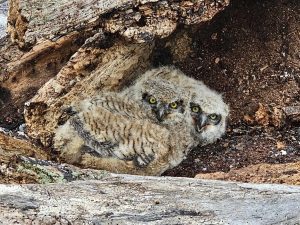
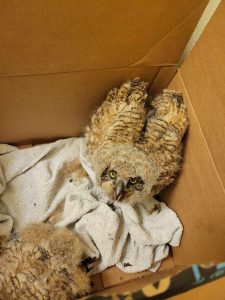
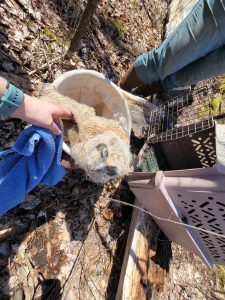
In Mid-April, the Fox Valley area was hit with a heavy winter storm bringing lots of winds. This storm caused a lot of damage throughout the area. Heckrodt saw at least 13 trees over our trails. The Heckrodt team worked hard in the few days after the storm to reopen the Reserve to the public. After a long day at the Reserve, I got home to a message on my phone from a local wildlife photographer. He told me he had been monitoring a Great Horned owl nest for a while, but when he stopped by this evening to check on it, he saw that the tree had fallen in the storm. He also noticed one of the three owlets was dead while the other two were laying in the tree’s wreckage. I messaged him back and told him I would be on my way. On the way over I called my co-worker Maddie to assist me. It is always helpful to have a second set of hands during this type of situation. I told Maddie to stop by the Nature Center to grab a large box, a pair of hawking gloves and some tape. We both went and met the photographer at a trail head and brought all our equipment with us as we were unsure what the status of the owls would be. We had to walk quite a way in a couple inches of water to get to the tree. As soon as we got closer, I could see that the tree had fallen so hard that it had completely shattered, leaving the poor owlets with no place to hide. Two of the owlets were huddled together in parts of the fallen tree. The deceased owlet laid on the ground a little further away. I could tell right away that its neck was broken, and it had died upon impact. I quickly pulled out my phone to call a local wildlife rehabber to ask the” what do I do now” question? They obviously needed some kind of help. Sue from Wildlife of Wisconsin thankfully answered and walked me through the steps we had to take. First, she wanted to see a photo of the deceased owlet. This would help her age the owlets based on their wing feathers. It was quickly determined based on their feather development that these owlets were about two weeks away from being ready to start leaving the nest. Sue explained they would need to go back up into their nest. However, since the tree was no longer intact, a replacement nest was needed. Before we could put the owls in a nest, we first had to make sure that the two owlets were ok to be put up in the nest. Sue said the owlets would need x-rays to ensure they didn’t have fractures caused by the fall. We quickly got to work putting the owlets in a box while making sure to keep an eye out for any angry owl parent. Once the owlets were safely secured in a box, we transported them to the Reserve where they spent the night. They stayed in a box that had a towel in it and a heating pad on low under it to keep them warm. The next day, the Heckrodt staff got to work finding out what we needed to do to help the owlets. Sue came to the Reserve to pick up the owlets so she could take them to get x-rayed at a veterinarian office she works with. Meanwhile Luke, our Executive Director called the city of Menasha to let them know what we were doing since it was on their property.
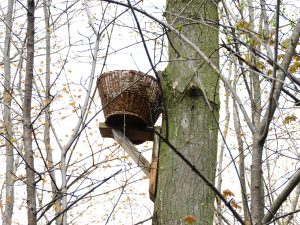
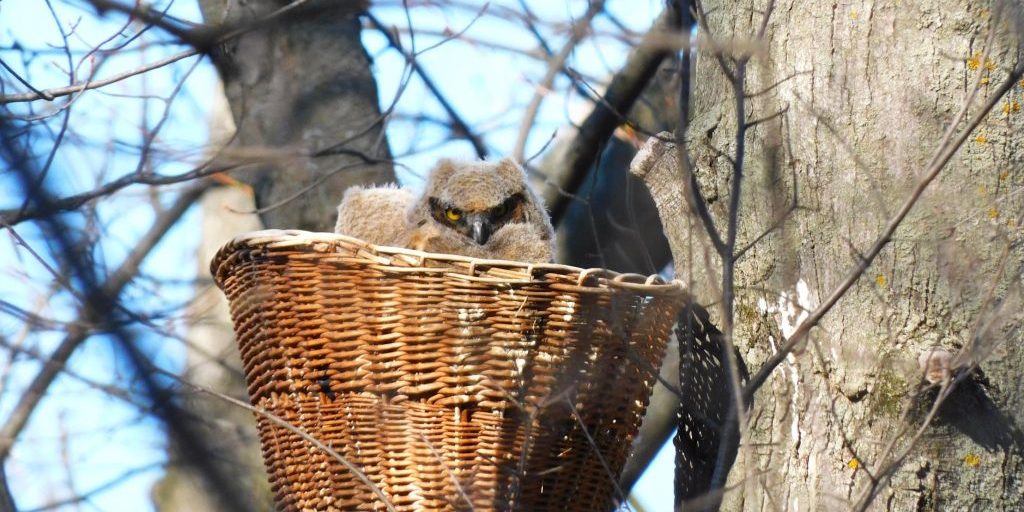
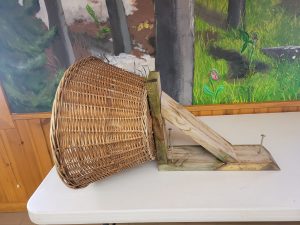
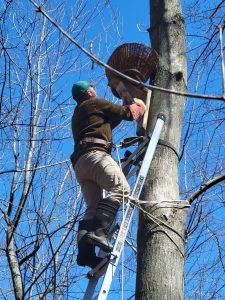
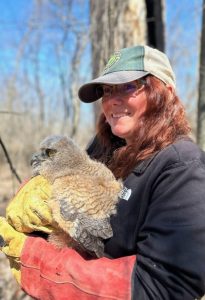
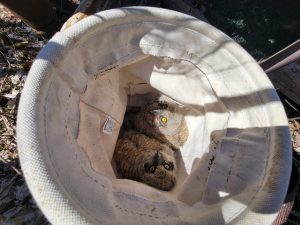
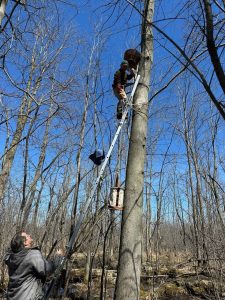
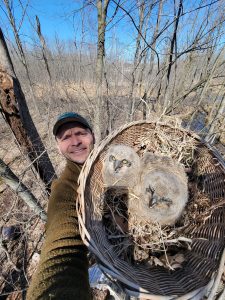
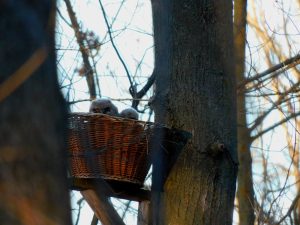
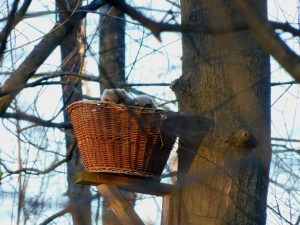
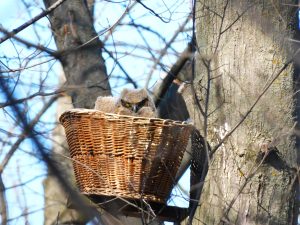
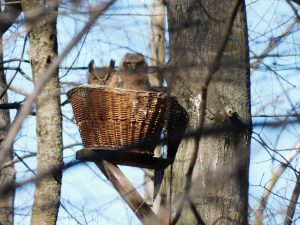
The next day, we heard back from Sue, and she told us that the owlets had nothing wrong with them and that we could put them in a makeshift nest. This was a huge win for the owlets. Sue and her husband, Jerry met the Heckrodt Team at the nest site to put up the replacement nest. Typically, there is a 3-day window in which you strive to get the owlets back, so the parents don’t abandon the nest location. So, we needed to get the owls in their new nest as soon as possible. Luke, his family, and I assisted Sue and Jerry in putting the owlets in the tree. The replacement nest was made of a wicker basket attached to a brace which would be screwed to the tree. Inside the nest, we put large sticks for the owlets to grip, and some leaves and grasses to keep the owlets warm. Luke safely secured the nest on the tree before we could put owlets in the replacement nest. Next, we put the owlets inside a fabric basket and Luke carefully brought them up carefully with a pully system. Once the owlets were safely in the replacement nest, we all left the area so the parents could go back to taking care of the owlets.
However, Sue explained to us that our job was not over quite yet. She told us we needed to monitor the nest for about 72 hours (about 3 days) at dawn and dusk to make sure we had visual confirmation of the parents attending to the owlets. We monitored them from afar with a camera and binoculars so we wouldn’t disturb the nest. It was important for us to see that the parents were coming back. Special thanks to Maddie and Jason Fowler for helping to assist and taking shifts for monitoring. I remember the sheer joy Maddie and I felt when we finally saw the mom swoop in with some food to feed an owlet. There may have been a happy dance in the woods.
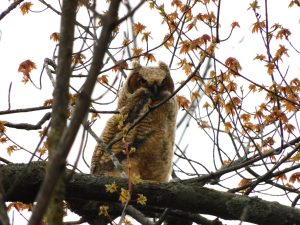
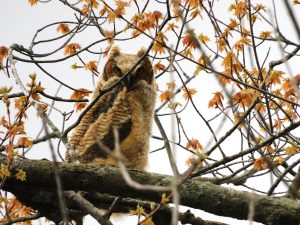
Three weeks later, we took a quick hike to the nest site and confirmed that both owlets have fledged the nest and were nearby. Another success for the owlets!
Reflecting back on this whole process has taught me that it takes a community of people working together to help wildlife. When we come together to help care for wildlife, we can truly make a difference.
Please remember that you can’t legally take care of wildlife. Wildlife rehabbers have licenses and certifications to do so. Heckrodt Wetland Reserve is not a licensed wildlife rehabilitator, but we are here for you to call to guide you in the right direction. Here are some resources if you are ever in a situation where you come across an injured wild animal.
Links: WILDLIFE REHABILITATION RESOURCES AND DIRECTORY and WISCONSIN WILDLIFE REHABILITATORS ASSOCIATION
Written by: Andrea Bierbrauer – Heckrodt Naturalist/Early Childhood Program Manager
-

- Owlets hunkered under the fallen tree
-
- Great Horned Owlets
-
- Owlet in the box on the way to be xrayed
-
- Replacement Nest
-
- Luke attaching the replacement nest in the tree
-
- Andrea holding the owl to be put in the basket
-
- Putting the owlets in the bag
-
- Owlets in the canvas bag
-
- The owls going up the tree with a pulley
-
- Owlets in the nest
-
- Observing the owls from afar
-
- Basket Owlets
-
- Owlets are adorable
-
- Look at mom behind the nest
-
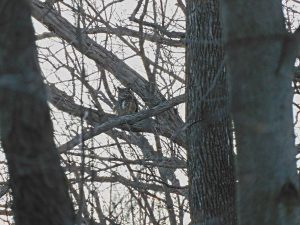
- Adult Owl in a tree near the nest
-
- Owlets fledged nest
-
- Fledgling in a nearby tree
-
- Empty Nest!