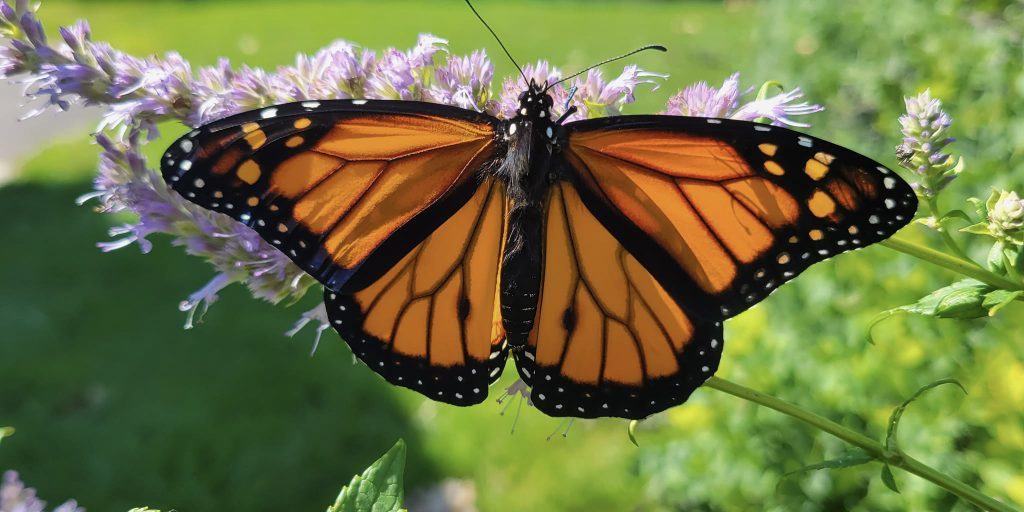
Fallen Kingdom: The Plight of the Monarch Butterfly
It wouldn’t be much of a stretch to call the monarch butterfly the most popular butterfly in North America, or even one of the most popular insects in general. Not only are they big and brightly colored, but their migratory habits mean their range spans the entirety of the US, Mexico, and beyond. Just about every schoolchild can tell you about the relationship between monarchs and milkweed, or how their iconic orange serves as a warning to predators.
So why are their populations still floundering?
One of my earliest memories is seeing a monarch flying high above the crowd at a Fourth of July parade. Growing up, my family and I collected monarch eggs and caterpillars from the butterfly weed in our yard and raised them through their life cycle until we could release them as adults. Caterpillars eat a LOT of milkweed— I remember frequently having to search for the plant along roadsides or at the borders of a friend’s property in order to keep them fed. For easier access and to better help monarchs, we planted a small patch of common milkweed in our garden, which remained there long after we stopped raising monarchs and even after I graduated and left for college. And then, while I was home one summer, I realized to my shock that I didn’t know when I had last seen a monarch caterpillar in our yard. Even adults were becoming few and far between compared to when I was a child.
That’s when I learned the awful truth: in 2022, monarchs had been listed as an internationally recognized endangered species.
This shouldn’t have come as a shock to me. The monarch’s popularity is not just due to its charisma but due to decades of active conservation efforts. Their population numbers have been steadily declining since the 1980s, with current estimates showing a loss of 80% of the eastern population and 95% of the western population. It’s just that, at age 23, this is the first time I’ve ever experienced something like this. I used to think it was only for older people. For example, my dad talks about how common Bobwhite Quail were when he was growing up in the 80s, but, today, I have never seen or heard one in all my 13 years of birding. (Similarly to monarchs, they’ve experienced an 80% population decline since 1970.)
Thankfully, this can happen the other way around, too. Beginning in the 1940s, populations of predatory birds such as the Bald Eagle, Osprey, and Brown Pelican were in steep decline due to the effects of the pesticide DDT. The closest call was with Peregrine Falcons, with fewer than 800 birds across the entire United States at their lowest point. Thanks to the work of conservationists such as Rachel Carson, the government banned the use of DDT in 1972, allowing bird populations to begin recovering. Today, all of these species are considered Least Concern, and their numbers are not only stable but continuing to rapidly increase. Many people can still remember when seeing an eagle was a monumentally rare occasion (although it’s still always a nice treat). Every single one is living proof that conservation works!
So, all is not lost for the monarchs. In fact, recent surveys show that their population may already be increasing compared to a record low in 2020. But we have to get to the root of the problem. Much like my other example, pesticides play a role. Chemicals sprayed to control mosquitoes or crop pests can’t tell the difference between a cornworm and a butterfly; they kill all insects in their path. Considering a key monarch migration route runs through the Midwest, which is 70% farmland, and much of the milkweed they need is found along the edges of fields, you can see why this is a problem. Plus, that habitat itself has been disappearing for a similar reason. 95% of farmers use the herbicide glyphosate to control weeds. Recently, the creation of genetically modified crops that resist this herbicide has allowed farmers to use more glyphosate than ever before, accidentally killing the native plants on their land. Pesticides are also commonly used by property owners who want a nice even lawn, not realizing that they are destroying the habitat value of their yard. That’s why…
YOU CAN HELP
Here are a few simple things you can do to help protect monarchs.
1: Don’t use herbicide or pesticide.
If you need to control plants, such as an invasive species, try using a spray based on acetic acid (vinegar), which will break down quickly in the environment. If you absolutely must use conventional herbicide for a large or stubborn plant, you can cut down the plant and apply a small amount of herbicide directly to the stump/stem (my ecology class in college did this to control invasive bushes). That way, only the individual target plant will be affected.
If aphids are your problem instead, try spraying plants with a mixture of sugar and water to attract lacewings, their natural predators. You can also add to the predator population directly by ordering and releasing ladybugs or other beneficial insects. Just make sure they’re a native species!
2: Plant native plants (especially milkweed).
While milkweed is a no-brainer due to its importance for monarchs, it’s mostly useful for the caterpillars, not the adult butterflies. Planting multiple kinds of native flowers, like my family has, will provide food sources for not only monarchs but many other native species too! For example, purple coneflower is loved by both butterflies and American Goldfinches! For more tips on how to make your yard a safe haven for butterflies, visit these pages: Butterfly Gardening and Monarch Waystation Program.
3: Support organic farmers.
I know how expensive organic food can be, so it’s okay if you can’t do this one. But it’s not just greenwashing. Farmers need to make a living too, and, since not using herbicide or pesticide means they end up with a lower crop yield, organic farmers have to sell their produce for a higher price to make up the difference. If we can demonstrate that going organic is financially viable as well as ethically sound, more and more farmers will be able to reconsider their chemical usage!
4: Use your voice.
Rachel Carson may only have been one person, but her words made the whole nation stop and listen. Not everyone can be Rachel Carson (sadly), but we still have a wider sphere of influence than we think! It’s estimated that the average person knows 600 people at any given time and will meet tens of thousands over the course of their life. If you can talk to even a few of them about the monarch situation and what they can do to help, you will have made a very real difference. But you can also affect things on an even larger scale. For example, you can contact your city or workplace and ask them to stop using pesticide/herbicide or to plant native plants. You can also choose to support politicians, whether local or beyond, who share your value of protecting nature.
If you’ve read this far, thank you so much for your time and interest. With your help, I hope that someday I will be able to look back, this time not with sadness for what we have lost, but with gratitude for what we were able to win back.
Written by:
Kaylee McCaskey, 2026 LTE Environmental Education Assistant
-

- Monarch eggs
-
- Monarch caterpillar emerging from egg
-
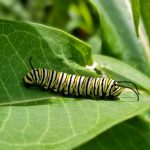
- Monarch caterpillar
-
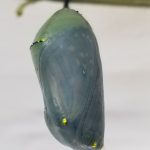
- Monarch chrysalis
-
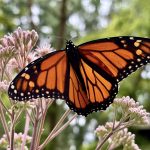
- Monarch butterfly
-
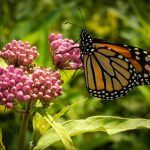
- Monarch on milkweed
-
- Male vs female monarch butterfly

-
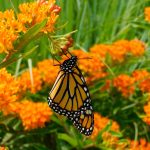
- Monarch on butterfly weed
-
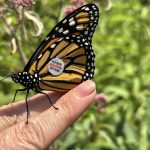
- Monarch tagging
-
- Heckrodt hiker was chosen by a butterfly