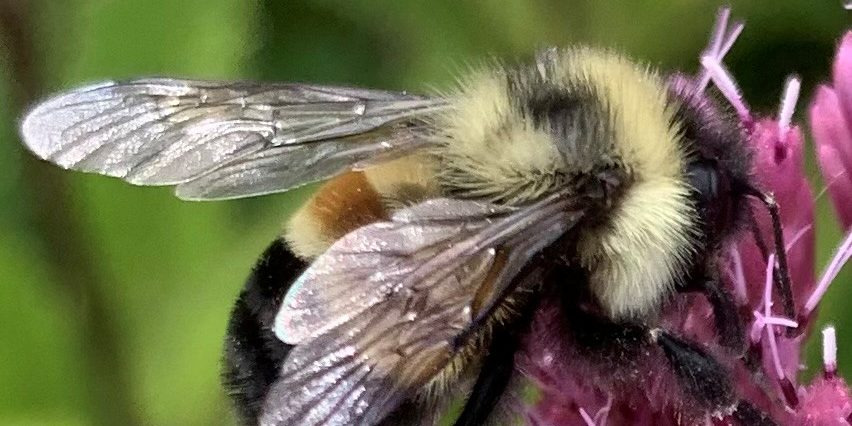
What’s the Buzz About Bumblebees?
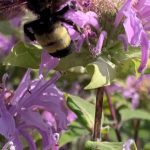
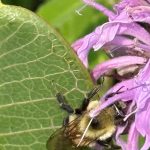
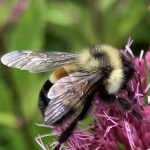
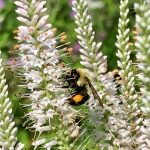
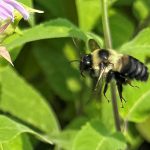
What’s hairy, black, yellow, maybe a little rusty and sounds like a buzzsaw when it flies by your nose? The bumblebee, of course. Bumblebees showcase Mother Nature’s sense of humor but also her attention to detail by providing a top notch pollinator for a wide variety of plants.
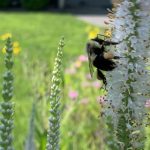
Bumblebees fly throughout Heckrodt in both the native plant gardens near the Nature Center as well as around the various native plants in every corner of the Preserve.
There are approximately 400 native bee species in Wisconsin. Eighty-five percent live their lives as loners and fifteen percent spend their lives hanging out with a few or many family and friends. Twenty bumblebee species currently or in the recent past have flown around the flowers of Wisconsin. With a little study and some patience, you can learn to identify all the bumblebees that fly in to spend some of their summer days with you.
Life Cycle of the Bumblebee
Bumblebees make an annual colony containing workers, males and queens. They are out and about in Wisconsin from early to mid-April to early October, with timing varying by species. The best time to see the most bumblebees visit flowers is early in the morning and later in the day, but it isn’t uncommon to to see bumblebees out foraging for food throughout the day. The workers, which are all female, and queens carry their own reusable shopping bags (like any good environmentalist) located on their back legs called a corbicula. They comb the pollen they get on their bodies down to the corbicula and stuff it in that carry home bag. When you see a corbicula on a worker bee, it may be all one color or several different colors depending on the color of the pollen and nectar they have collected.
A bumblebee colony starts with a single queen, called a gyne, that has spent the winter hibernating in an abandoned rodent hole or in leaves or grass piles that you have kindly left for them in an area of your yard. The queen is a very busy bee in the spring, emerging to find a suitable building site for her colony. She then builds pots of wax that comes from specialized glands in her abdomen. She forages for pollen and nectar to put in the pots, where she lays eggs. She raises this brood alone. Over two to three weeks, the egg hatches into a larva, which goes through several growth stages before pupating and transforming into workers that take over the food collection duties. The worker bees live about a month. The queen remains in the nest continuing to lay eggs, caring for broods, and keeping the temperature at 30C.
In the late summer to fall, depending on species, the queen lays unfertilized eggs which will become males (also called drones). Fertilized eggs reared by the workers will become new queens (gynes). The drones, which do not have stingers, and queens leave the nest to mate. The new fertilized queens go their own ways to find a cozy spot to hibernate for the winter. The original queen and the drones die off and the yearly cycle is complete. Unlike European honey bees which live in a big hive colony with lots of bees, bumblebee colonies vary in size depending on the species, but somewhere between 40 to 250.
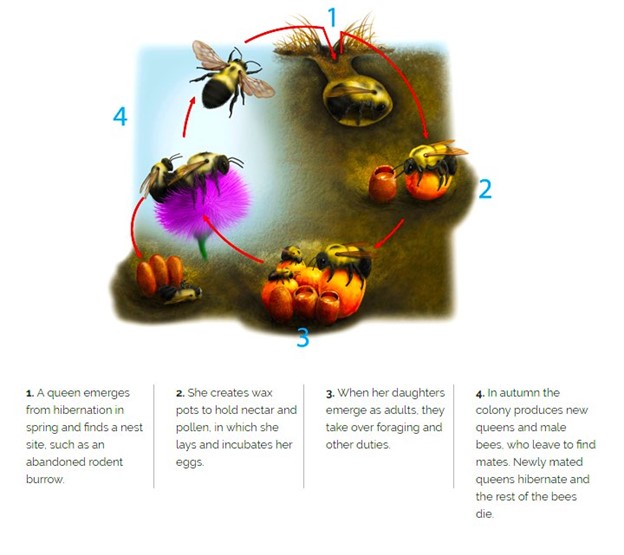
(Image: David Wysotski / Allure Illustration; Source: Xerces Society)
Threats to Pollinators
It is not all sunshine, light, and beautiful blooming flowers for bumblebees. Of the 20 bumblebee species in Wisconsin, one is listed as a federally endangered species (Rusty-patched), seven are considered state species of greater conservation need, three are listed by the state as species with information needs meaning we don’t know whether to be worried about them or not.
Threats to all bee species include habitat loss; the impact of intensive agriculture practices including the use of pesticides and competition from commercial bees (honeybees); the use of lawn and garden pesticides including home mosquito fogging; decreased floral diversity; disease; and, climate change.
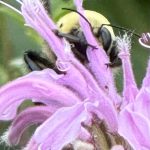
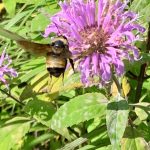
You can help all bees including bumblebees by not spraying pesticides on your lawn or in your planting areas; planting native plants that are attractive to bees such as bee balm (Monarda species), Joe Pye Weed, Culver’s Root, and many others; leaving garden clean-up until the late spring allowing bees to overwinter in your yard; and spreading the word of the importance of pollinators to the environment and human well-being (no bumblebee means no tomatoes means no pizza or red pasta sauce!).
Cool Bumblebee Facts
- Bumblebees have a superpower called buzz pollination! The bumblebee grabs hold of a flower and vibrates its thoracic muscles so fast that it shakes loose the pollen from the plant which it then collects and brings back to the colony. Crops such as tomatoes, blueberries, eggplants, and cranberries are dependent on buzz pollination for fruit production.
- The average speed for a flying bumblebee is 6.7 miles per hour, however some can go as fast at 10 miles per hour.
- There are 250 different species of bumblebees in the world.
- When hibernating, in order to prevent freezing, queens circulate an antifreeze type fluid through their bodies.
Additional Resources
Wisconsin Bumblebee Brigade – https://wiatri.net/inventory/BBB/
THE source to learn more about bumblebees in Wisconsin. You can join the Wisconsin Bumblebee Brigade and become a community scientist by taking one of their introductory identification courses. Using photography and submitting your photos, you can contribute your bee sightings to the statewide database and further understanding of population health of the various species of bumblebees in Wisconsin. Courses are provided around the state during ‘bee season’, with High Cliff State Park being one location to check. In addition, there is a self-paced course on the Brigade’s website.
There is also a Facebook group that helps with bee identification in Wisconsin, recently expanding to cover other Midwest states. Wisconsin/Midwest Bumble Bee Observers – https://www.facebook.com/groups/555238811914604/
Xerces Society for Invertebrate Resources – https://xerces.org
A great resource for all things bee (or bug in general).
Photos taken and blog written by: Laurie Case